On 1 October 2026 Arjen Lubach's programme put Roblox in the spotlight with a segment called 'Roblox is dangerous, addictive and really not good for children'. Its starting point will be familiar to any parent: millions of children spend part of every day in an online playground, mostly unsupervised, alongside adults they cannot see. The segment is in Dutch with subtitles, and it is worth watching together with another parent.
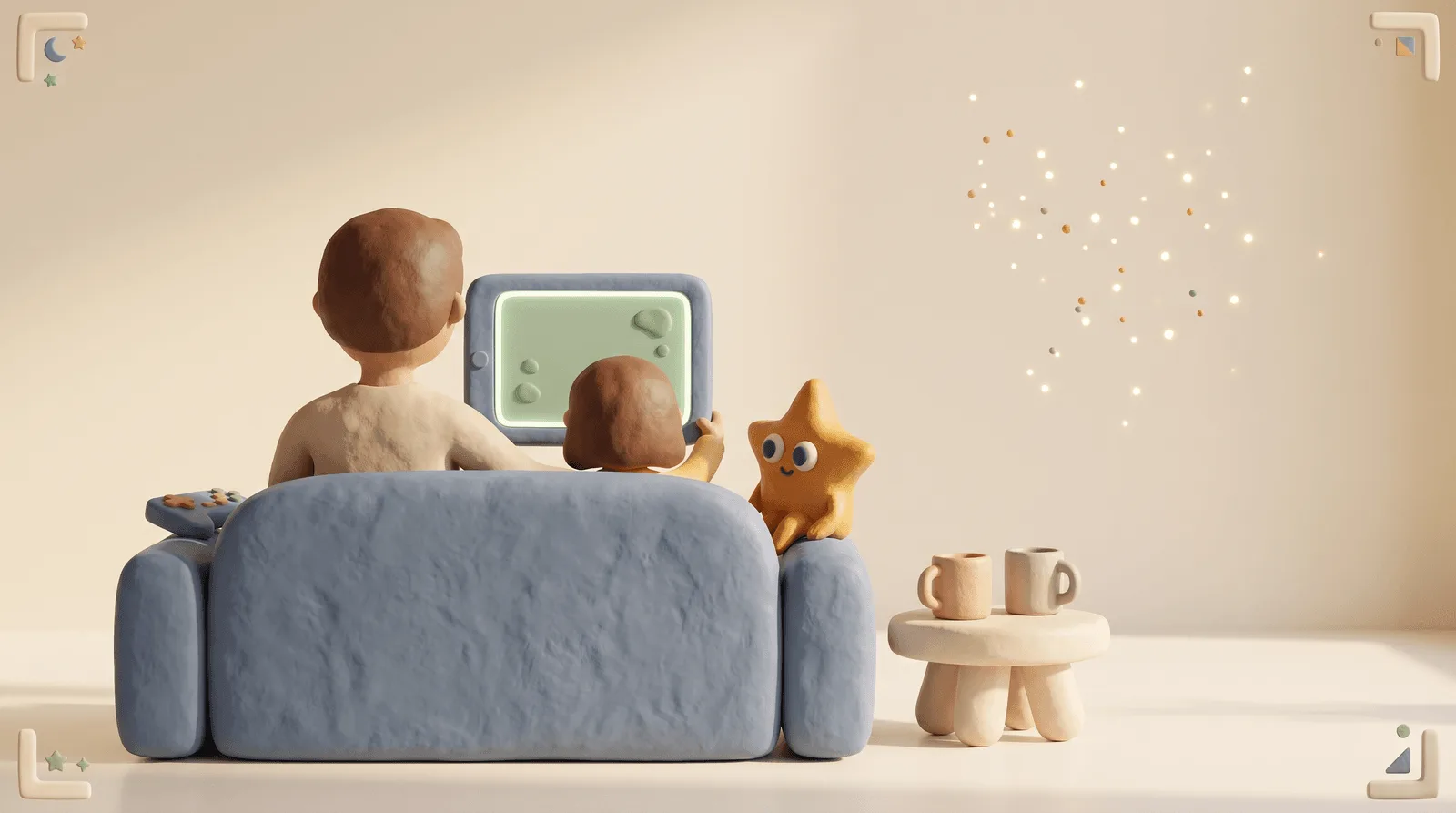
The most useful reaction came from Emily Jacometti, co-founder of HackShield Future Cyber Heroes, whose team asked 85,000 children what actually goes wrong in the games they play. Her takeaway is not to take the games away. It is to play along: sit next to your child, watch, ask who they are playing with, and keep talking, including when something goes wrong. It is the most useful line in the whole discussion, and the hardest to act on. So this article is about acting on it: what the children said, what playing along looks like on an ordinary weekday, what to do when something has gone wrong, and the question it puts to anyone who builds apps for children, us included.
What 85,000 children said about the games they play
HackShield is a free game in which children aged 8 to 12 learn digital skills at home, at school and in libraries. In a special level, 85,000 of them answered questions about their own gaming, and the results were published in December 2025. About 29,400 children, one in three, said they talk to people they do not know in games. More than 51,000, roughly three in five, said someone had been mean to them in a game: 31,345 once, 20,624 more often. Only 34,665, about four in ten, said they had never had a negative experience.
Those numbers cover the games children play in general, not Roblox alone, but Roblox is where a great many of them are. The platform has moved: since January 2026 Roblox asks every user for an age check, by face estimation or ID, before they can chat, sorts players into age bands that limit who can message whom, and keeps chat off for children under nine unless a parent allows it. The Netherlands was one of the first countries where this was tested. In January 2026 the Dutch regulator ACM also opened an investigation into whether Roblox does enough to protect minors under the EU Digital Services Act. Age checks help against strangers. They do much less about the other two findings: children treated badly by players their own age, and children who do not tell anyone.

'Play along with your child': what it looks like in practice
Playing along is hard for reasons that have nothing to do with not caring. The game is fast, your child is the expert, and a parent reading over a shoulder quickly feels like an inspection. These five habits make it easier:
- Ask for a tour, not a report. 'Show me your favourite game' gets further than 'what have you been doing?'. Let your child teach you, and play a round badly yourself.
- Keep it short and regular. Fifteen minutes once or twice a week beats one long, tense check. It works the same way as reading together.
- Ask who, not only what. Who were you playing with? Do you know them offline? Has anyone asked you for something: your real name, a photo, game money, or to carry on talking in another app? A request to move to another app, or to keep a secret, is exactly the moment to talk.
- Go through the settings together. Look at who can chat with your child, who can join their games and whether spending is capped, and decide together instead of quietly switching everything off. Roblox has parental controls for chat, spending and screen time, and most big games have something similar.
- Agree the rule before you need it: if something strange happens, you can always tell me, and you will not lose the game for telling me.
Do you have to remove all games? No, and Jacometti is clear about that. Don't be angry about what your child does; talk about it, and make sure they can come to you even when things go wrong. HackShield, Offlimits and the Dutch police's COPS team made a free toolkit with simple ways to start that conversation at the kitchen table. It is in Dutch and written for parents of 8 to 12-year-olds.
Download the HackShield toolkit for parents (Dutch) →
When something goes wrong
How you react to the first story decides whether there is a second one. Stay calm, thank your child for telling you, and only then act: take screenshots of the username and the messages, block and report the player in the game, and do not reply on your child's behalf. If a password may have been shared, change it together.
If an adult asked for photos, tried to move the conversation to another app, or threatens to share images, get help straight away. In the Netherlands, Helpwanted, the helpline run by Offlimits, gives free and anonymous advice, and you can report to the police. In other countries the national child helpline or the police can help in the same way. If the trouble comes from classmates, tell the school too: much of what happens in a game carries on in the playground.
The question for anyone who builds for children
Playing along is a parenting answer, not a technology one. But it puts a question to everyone who builds for children: is your product designed to be used with a parent, or to keep a child occupied away from one? We have made some choices on that in Samio, our learning app for ages 4 to 12. There are no ads and no advertising trackers. There are no in-app purchases: the family app is a paid download, so there is nothing for a child to buy, and links that leave the app sit behind a parent gate. There is no chat, no friend requests and no way for a child to contact anyone. Not because it is good marketing, it costs us revenue, but because the alternative is building the thing this discussion is warning parents about.
We will not pretend there is nothing game-like in it. Children earn stars and badges, and the app counts the days they practise in a row. What is missing is the machinery built to keep a child playing longer than they should: no messages about losing anything, a broken run that quietly starts again, no endless feed, no autoplay, no surprise rewards, and no notifications unless a parent switches on one daily reminder. Parents can set a daily limit of 15 to 60 minutes, based on the time their child actually practised, after which Sam suggests coming back tomorrow. And because each child sets their own daily goal, the moment to sit down next to them is built in: ask them to show you what they chose, and how it went.
See what Samio looks like for ages 4 to 12 →
Sources and further reading
- LUBACH: 'Roblox is gevaarlijk, verslavend en ECHT niet goed voor kinderen' (YouTube, Dutch with subtitles)
- HackShield: 85,000 children on safe gaming, press release, December 2025 (Dutch)
- HackShield toolkit for parents on safe gaming (Dutch, free)
- Helpwanted, the Offlimits helpline (the Netherlands)
Frequently asked questions
Is Roblox safe for kids?
Not on its own, and not unsupervised. Since January 2026 Roblox requires an age check before anyone can chat and keeps chat off for under-nines without a parent's consent, which helps against strangers. But HackShield's survey of 85,000 children aged 8 to 12 found that one in three talk to strangers in games and three in five have had someone be mean to them. With the parental controls set together and a parent who regularly plays along, the risks become far more manageable.
Should I ban Roblox?
HackShield advises against simply banning games. Children often play anyway, at a friend's house, and are then less likely to tell you when something goes wrong. Set the controls together, play along regularly, and agree that your child can always come to you without losing the game.
What should I do if a stranger contacts my child in a game?
Stay calm, take screenshots of the username and the messages, block and report the player in the game, and do not reply yourself. If the person asked for photos, wanted to move to another app or is making threats, contact a helpline such as Helpwanted by Offlimits in the Netherlands, or the police.
Does Samio have chat or in-app purchases?
No. Samio has no chat, no friend requests, no ads and no in-app purchases. The family app is a paid download for ages 4 to 12, links that leave the app sit behind a parent gate, and parents can set a daily time limit based on the time their child actually practised.