Practical strategies and app-based tools for teachers working with elementary students
Reading is the foundation of all academic success. Yet many elementary teachers face a common challenge: students in the same classroom are at vastly different reading levels. How do you provide effective, differentiated reading practice when you have 25 students and one of you?
The answer increasingly lies in a blend of proven teaching strategies and adaptive technology. In this guide, we'll cover practical approaches that work — and how tools like educational apps can support structured reading practice in the classroom.
The Challenge: Wide Reading Gaps in One Classroom
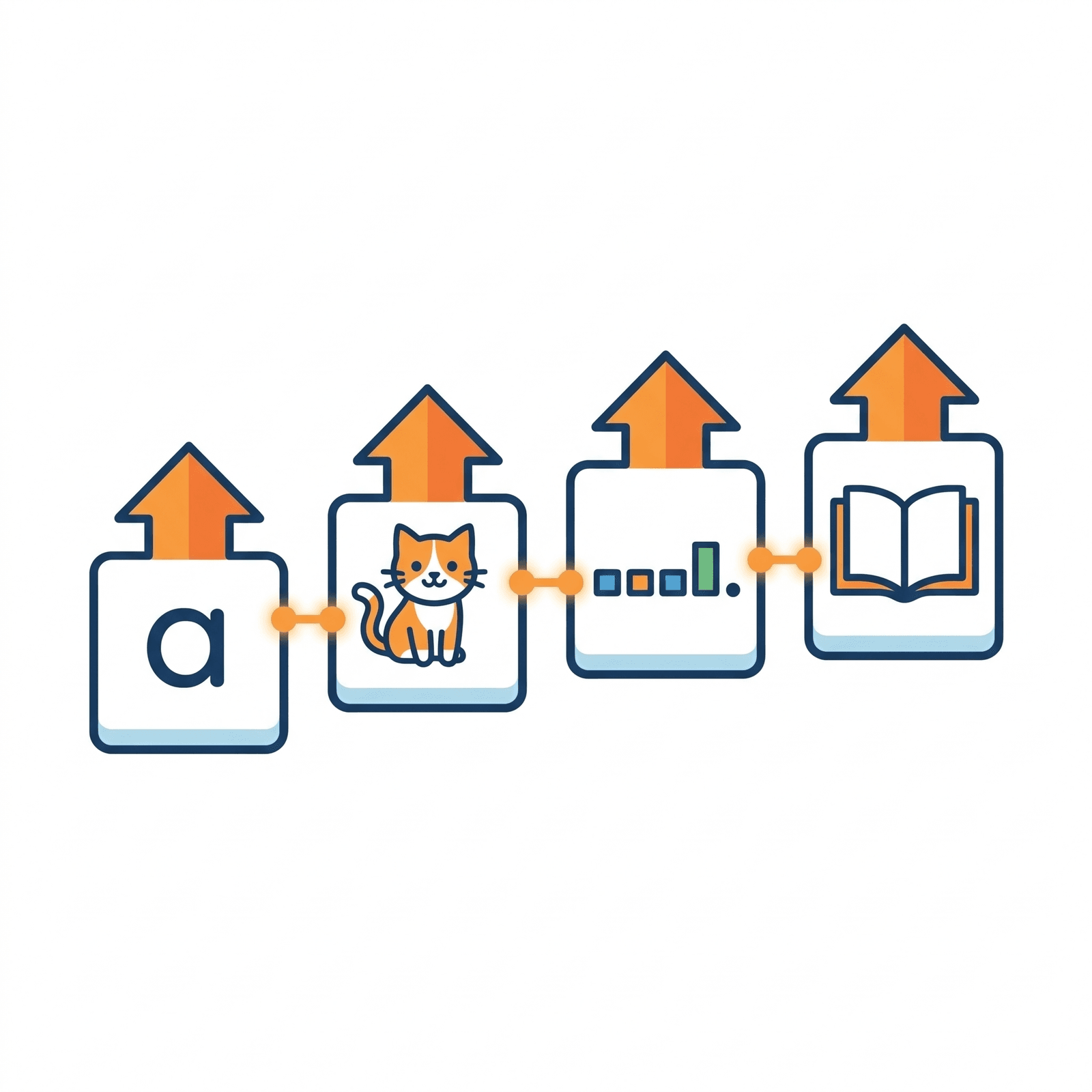
In a typical Year 3 or Grade 3 classroom, reading levels can span 3–4 years. Some children are still working on letter recognition and basic phonics, while others are reading chapter books independently. Traditional whole-class instruction leaves struggling readers behind and advanced readers unchallenged.
Research consistently shows that differentiated, adaptive practice — where each child works at their own level — produces better reading outcomes than uniform instruction alone.
5 Strategies That Work
1. Guided Reading Groups
Organize students into small groups based on reading level. Rotate groups through stations — one led by the teacher, others working on independent activities or using apps. This ensures every student gets targeted instruction at their level.
2. Daily Phonics Practice
Phonics instruction should be systematic and explicit, especially for Stages 1–3 (roughly ages 4–7). Focus on letter-sound correspondence, blending, and segmenting. Apps with phonics exercises can provide structured, repeatable practice that reinforces classroom teaching.
3. Vocabulary Building Through Context
Teach vocabulary within the context of reading passages, not in isolation. Students retain words better when they encounter them in meaningful contexts. Interactive exercises that ask students to use words in sentences are particularly effective.
4. Adaptive App-Based Practice
Educational apps with adaptive difficulty can serve as a powerful supplement. When a student works on a tablet with an app that adjusts to their level, they get:
- Immediate feedback on their answers
- Practice at exactly the right difficulty level
- Consistent daily practice without requiring 1:1 teacher attention
- Data that helps teachers identify who needs extra support
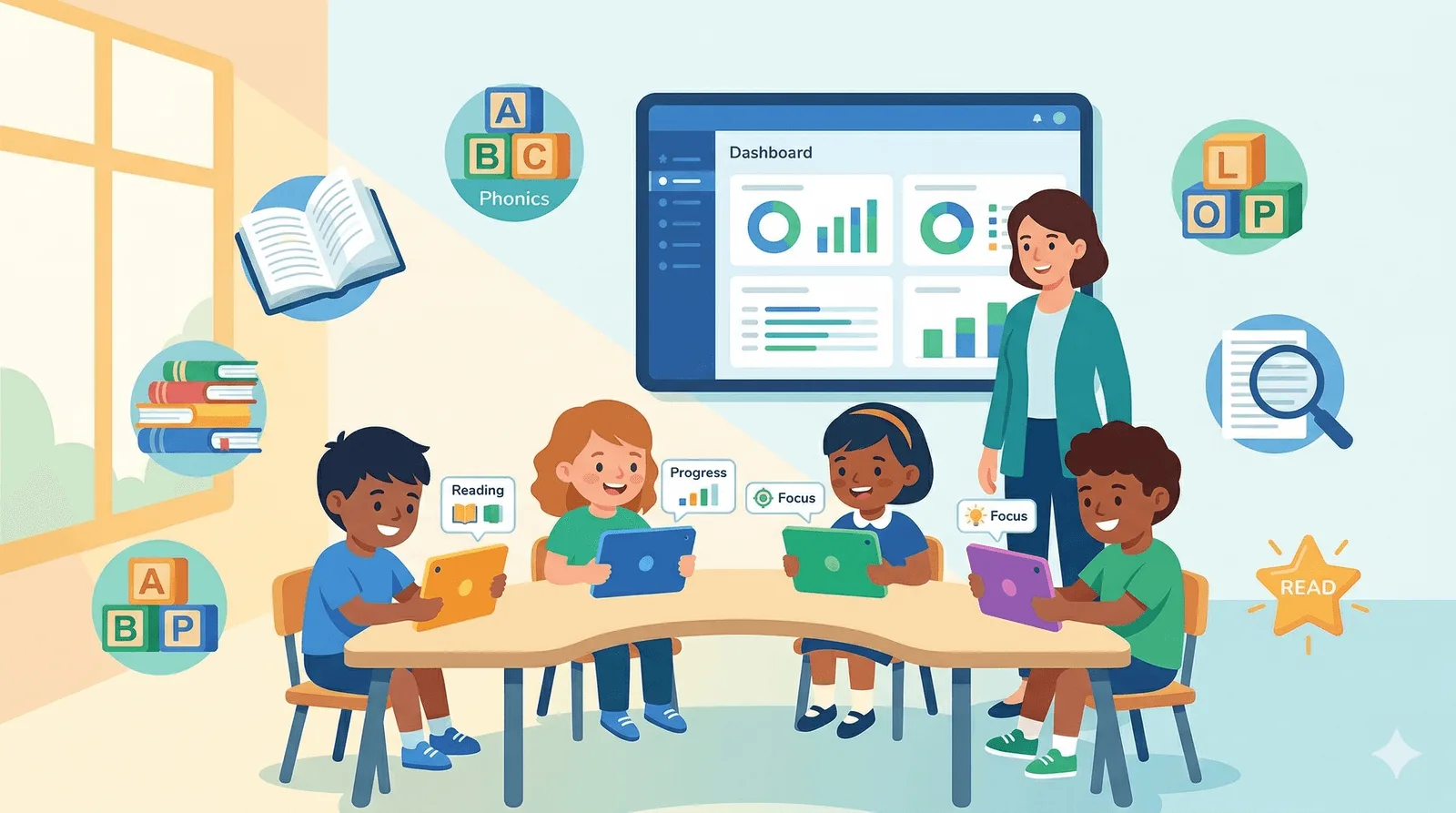
Samio Learning Samio Learning, for example, covers reading and phonics exercises with adaptive difficulty across 6 curriculum stages aligned to international standards. Its companion Samio for Schools platform gives teachers a real-time dashboard showing each student's progress, areas of difficulty, and time spent practicing. Samio for Schools
5. Progress Monitoring & Data-Driven Decisions
Regular assessment is necessary but time-consuming. App-based tools can automate much of this. When teachers have access to analytics showing which students are struggling with which skills, they can intervene earlier and more effectively.
What to Look for in a Reading App for Schools
Not all educational apps are suitable for classroom use. Look for:
- Curriculum alignment — Does it follow recognized learning standards?
- Adaptive difficulty — Does it adjust to each student's level automatically?
- Teacher dashboard — Can teachers see progress across all students?
- Privacy & COPPA compliance — Does it protect student data?
- Multi-language support — Especially important for multilingual classrooms.
- No advertisements — Ads in educational apps are distracting and inappropriate.
How Samio Learning Supports Reading in Schools
Samio Learning Samio Learning was built with both home and classroom use in mind. Here's how it fits into a school reading program:
- 7-stage curriculum — from letter recognition and basic phonics to complex sentence comprehension, aligned with international primary education standards
- Adaptive exercises — difficulty adjusts automatically based on each student's performance
- Reading + writing + grammar — reading doesn't exist in isolation; Samio reinforces reading skills through connected writing and grammar exercises
- 7 languages — ideal for multilingual classrooms and ESL/EAL programs
- Teacher analytics — the Samio for Schools dashboard shows which students need attention, what skills they're struggling with, and how much time they're spending
- Custom challenges — teachers can create targeted reading exercises for specific learning objectives
- COPPA compliant — only nicknames and age ranges are used; no personal student data is collected
Getting Started
If you're considering adding an adaptive reading app to your classroom toolkit, start with a small pilot. Choose one reading group, set daily practice goals, and track progress for 2–4 weeks. Most teachers see measurable improvements in reading accuracy and fluency within the first month.
Samio for Schools Samio for Schools offers a 14-day free trial on all three plans — Homeschool (up to 10 students), Classroom (up to 60 students) and School (up to 1,500 students).
See our full comparison of the best learning apps for kids →